
Seven Fishes, Baby.
Searching for Christmas cheer while cooking Gabrielle Hamilton's Fried Sardine Spines


Seven Fishes.
I didn’t know what that phrase meant for the longest time as a kid. All I knew was that if it was Christmas Eve, and I even looked at a piece of capicola or gabagool (your choice), my mother would make me feel like I just offended Jesus Christ himself.
Which was so confusing.
Like many a millennial who had binged ABC Family’s 25 Days of Christmas, I’d see scene after scene of families (human and cartoon) sitting around long tables with giant roasts in the center.
Those little white chef hats (which I recently learned are called manchettes) adorning the bones made the meals look that much more special. Mountains of carrots, peas, broccoli, and mashed potatoes. Plus, these giant muffin-looking things they kept referring to as puddings?
My mouth watering, my stomach grumbling, I pleaded with my mom, why couldn’t we have that for Christmas Eve?
“Because it’s a sin.”
Case closed for this Italian American cradle Catholic.
Christmas was always my favorite holiday as a kid. We always had two Christmas trees, hip-swaying Jingle-Bell Rock-singing Santas, and intricate Christmas villages. But the real stars were the oddities: A giant stuffed Grinch with a glowing, beating heart. A treasured glow-in-the-dark “Happy Holidays” sign that I’d watch go from green to blue to orange. This blue orb—a giant, ball-sized ornament that held as much sacred weight as the star on top of the tree. Don’t ask why. I still don’t know.
And Jesuses. So many Jesuses. Everywhere.
The best being our Kinder Egg Nativity set, which my grandmother had brought back from Italy. Of course, we couldn’t put Him out until Christmas morning, but still. With all of these different colors, textures, and decorations, I felt like I woke up in Santa’s workshop every morning.
Christmas was also our annual culinary finale, the culmination of a year’s worth of cooking. And man, did my family go out with a bang.
My grandparents used to go to Newark’s Ironbound district (if you know, you know) and buy all of the fish and seafood we’d enjoy for dinner, on Christmas Eve morning.
The spread was impeccable. Between the plethora of tentacles, the baccalà, and fried shrimp (with the heads still on), I can still picture the huge aluminum pot where the octopus brewed. That deep purple, briny steam was the true signal that Christmas Eve had arrived. Of course, I could always count on my grandfather chasing me around with anguille on a plate (eels that I swear were still alive) to mark the holiday as well. Those, I didn’t eat.
To spare the house that permanent fish smell, we’d fry the bulk of the catch in the industrial fryers at the pizzeria where my father worked. But the true welcome chaos stayed in our tiny kitchen.
It was a multigenerational squeeze of lemon, garlic, white wine, and parsley. While my grandmother was stirring the sauce for tomorrow’s lasagna, my dad would rhythmically shake the pot of clams we just steamed for the pasta alla vongole. Out on the deck, my mom would be braving the cold with a Corona, a Marlboro Light, and a Fry Daddy, cranking out panzerott’ to order.
There was laughter, warmth, and love. Whether we always had seven fish was questionable. Sometimes we did, sometimes we didn’t, but the intention was, and still is, there.
As it always does, time passed. I got older, so did everyone else.
Soon, the older generation had dropped off one by one. We couldn’t hear their WWII immigration stories anymore, or smell them smoking in the kitchen while playing scopa with the back door cracked open.
People moved away. The uncles with the cool forest-green SUVs (the ones who used to “superslam” you into the couch) couldn’t make it anymore. Some people passed. Others stopped talking. Our table got “bigger” because fewer people were packed around it. We were down to one tree, and one year we had none. Some of the food hits were still there, but the holiday I had loved as a child, filled with its tinsel and whimsy, was no longer what it once was.
The first few Christmases when I felt the change, it left me with a chill in my lungs that over time turned into a metaphorical ice pick. I couldn’t breathe. There were several years in a row where I would sneak off to my room and just start sobbing. My shoulders hunched over, I felt the ice pick migrate to my stomach and make everything cold.
For me, the holidays (specifically Christmas) became a marker for loss. A reminder of all the things I couldn’t experience again, and all the people who weren’t there anymore, both physically and mentally. And year after year, it kept getting worse. More loneliness. More isolation. More sadness.
My relationship with Christmas had done a 180. I hated it.
I don’t really know when this relationship started to mend. I just know that my favorite holiday had darkened, and that honestly pissed me off.
I was older now, in my own place, and my budget for decorating was small. But I was determined to unleash the childhood Christmas ghosts of my past. Or at least a few.
I bought a dinky, artificial tree from Target and decorated it with some of the ornaments I grew up with, including several wood-carved, hand-painted angels I had bought at my elementary school’s holiday boutique. But my all-time favorite was of Santa holding a mile-long CVS receipt from 1993.
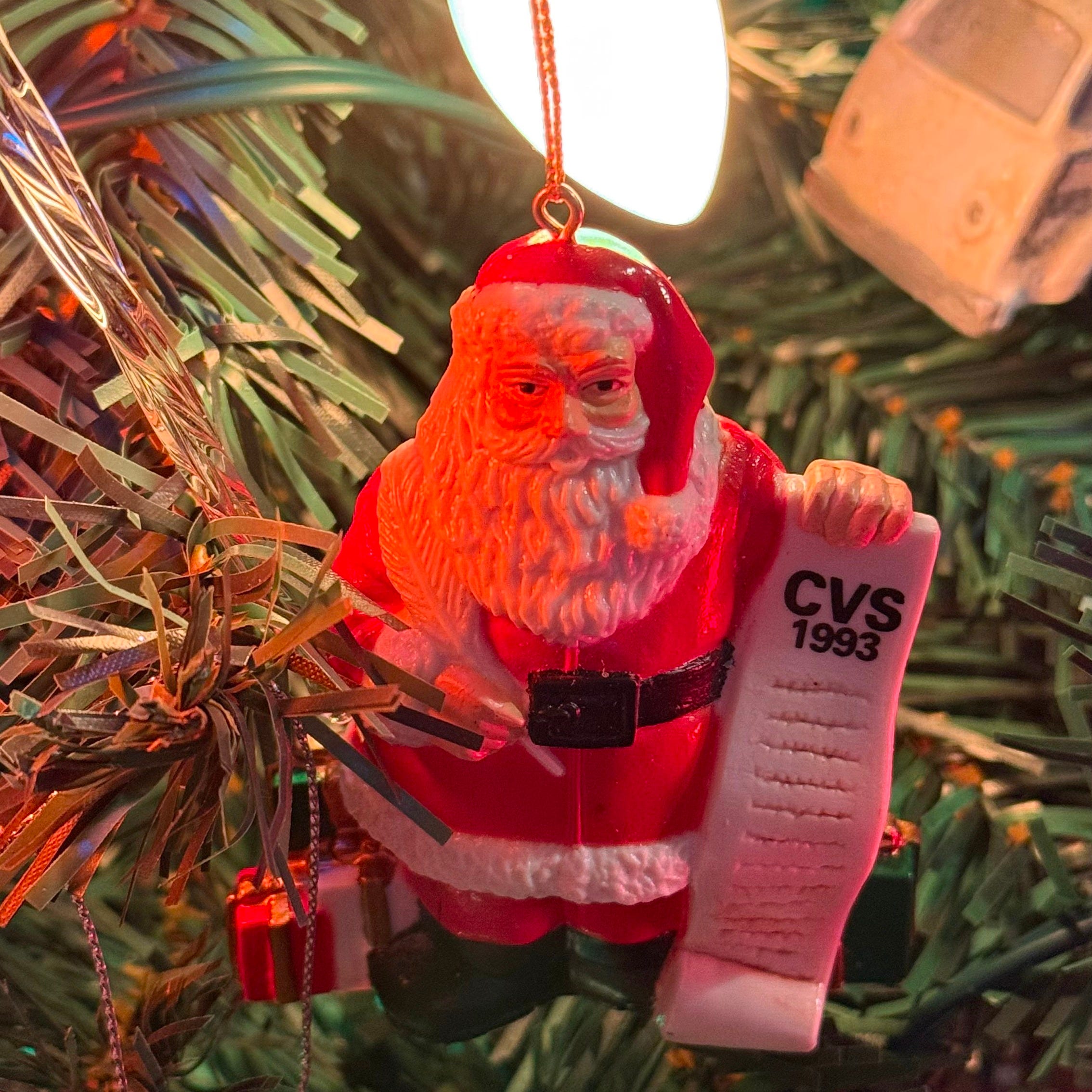
I went through the motions of Christmas traditions (old and new) that I thought would help me to feel something. Optimism. Love. Belonging.
It’s been several years now, and I’m not going to lie. Sometimes this works. Sometimes it backfires.
Case in point: Last year, probably 10 days before Christmas, I decided to make 6 different types of Christmas cookies to distribute in personalized cookie boxes for my entire family.
200+ cookies and way too much money spent later, I had baked myself sick. Literally. I could barely pick my head off the table during Christmas Eve dinner.
So that sucked.
But, get this.
For the first time, on Christmas Day (code for, we can eat meat again), I cooked the meal that I had craved so badly as a child—finally—as an adult. A perfectly roasted beef tenderloin with mashed potatoes and chives, bright green steamed broccoli, and of course, Yorkshire pudding. Washed down with some Maine Root in champagne flutes (I was sick, after all).
The only thing missing was the manchettes, but I just don’t like prime rib. Sue me.
It was the Christmas dinner I had always wanted. It was perfect.
I know for many that December is a minefield of triggers.
That repetitive loop of mind-numbing Christmas carols vibrating against a grief you thought you’d tucked away.
The backdrop of celebratory meals and activities that no longer seem celebratory.
This crushing weight of obligatory joy can bring up feelings of loss, non-belonging, and an intense sadness that people who haven’t felt it may never understand. It’s a strange kind of mourning, the kind that happens in a room full of people who all seem to be having a good time.
So, if I could offer the lightest feather of comfort to those struggling, to those feeling that indiscernible weight in their chests today, I’m here to say: I see you.
I see the effort it takes just to show up.
You are not alone.
We can pull the icepick out, together.
Wishing everyone, especially those who have a complicated relationship with Christmas, health, safety, and a perfectly warm cup of cocoa—with extra marshmallows, of course.